Wednesday, 30 May 2012

Flame virus most powerful espionage tool ever, UN warns

The Flame virus is the most powerful espionage tool ever to target countries, a United Nations agency responsible for regulating the internet has warned. This is the most serious warning we have ever put out," said Marco Obiso, cyber security coordinator for the UN's Geneva-based International Telecommunications Union.

The formal warning will tell member nations that the Flame virus is a dangerous espionage tool that could potentially be used to attack critical infrastructure, he said. "They should be on alert."
Orla Cox, a security analyst at the security firm Symantec, said that Flame was targeting specific individuals, apparently Iranian related. "The way it has been developed is unlike anything we've seen before," she said. "It's huge. It's like using an atomic weapon to crack a nut."
Figures released by the Kaspersky Lab show that infections by the programme were spread across the Middle East with 189 attacks in Iran, 98 incidents in the West Bank, 32 in Sudan and 30 in Syria.
Other countries where the virus was detected include Lebanon, Saudi Arabia and Egypt.

Evidence suggest that the virus, dubbed Flame, may have been built on behalf of the same nation or nations that commissioned the Stuxnet worm that attacked Iran's nuclear program in 2010, according to Kaspersky Lab, the Russian cyber security software maker that took credit for discovering the infections.
"I think it is a much more serious threat than Stuxnet," Mr Obiso said.
Unlike the Stuxnet virus that was previously used to disrupt Iranian systems, Flame does not disrupt or terminate systems.
Iran, whose nuclear facilities and oil ministry have previously been the target of virus attacks, accuses the US and Israel of trying to sabotage its programme. It denies the allegation that its programme is weapons related.
A leading Israeli politician hinted at the country's involvement in the virus. Israel rejects Tehran's claims that its nuclear programme is designed to produce energy, not bombs. It considers Iran to be the greatest threat to its survival.
"Whoever sees the Iranian threat as a significant threat is likely to take various steps, including these, to hobble it," Vice Premier Moshe Yaalon told Army Radio. "Israel is blessed with high technology, and we boast tools that open all sorts of opportunities for us."

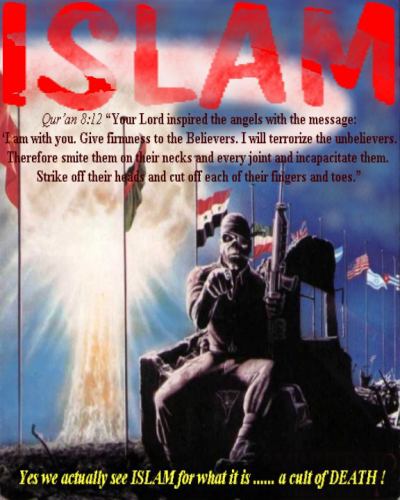
Muslim-hater website cries for Tunisia banned Hijab

The new Islamist Regime has already unbanned Hijab, an Islam-hater website said, asking, "How long until Islamist Regime make it mandatory for all women to cover themselves?"

Neglecting the fact of high unemployment rate and human rights abuse carried by the former dictate regime, the Islam-hater website

says that Tunisia was probably the most modern, Westernized Muslim country in the world.

The website also claims that the days of tourism for Europeans in Tunisia are over while in fact tourism as well as economy is reviving.


Tuesday, 29 May 2012

Israeli soldiers accused of violating status quo by raising flag near al-Aqsa mosque

Soldiers on Monday violated the status quo on the esplanade of the mosques in east Jerusalem by raising Israel’s flag, the head of the Islamic Waqf organization that oversees the compound charged.

“More than 180 soldiers from a special Israeli army unit today raised a large Israeli flag opposite the mosque of the Rock, which is a grave provocation,” Sheikh Azzam al-Khatib told AFP.

The sprawling esplanade containing the Al-Aqsa mosque and the adjacent Dome of the Rock in the historic Old City is the third-holiest site in Islam after Saudi Arabia’s Mecca and Medina.

It is also the holiest site for Jews, who refer to it as the Temple Mount because it was the location of the Second Temple, destroyed by the Romans in 70 AD.

Sheikh Khatib said the soldiers entered the esplanade during a visit approved and organized by Israeli police.
He said he had made a complaint both to the Israeli police and to the Jordanian authorities. Jordan, which has a 1994 peace treaty with Israel, is the custodian of Muslim holy sites in Jerusalem.

Police spokeswoman Luba Samri confirmed to AFP that there had been an incident but said it concerned “a small flag,” and said that a senior officer at the scene quickly intervened to expel the soldiers from the compound.

She said they would later face disciplinary measures.

Israel occupied the eastern sector of Jerusalem during the 1967 Six-Day War in a move never recognized by the international community, and later annexed it.

For Israelis, Jerusalem is their “eternal and undivided capital,” but Palestinians claim east Jerusalem as the capital of their promised state.

Jerusalemites protest the planting of fake Jewish graves around Al-Aqsa

OCCUPIED JERUSALEM, - Hundreds of Jerusalemites organized a sit-in at Wadi Rababa neighborhood in Silwan to protest the planting of fake Jewish graves south of Al-Aqsa Mosque in occupied Jerusalem.


The occupation has planted during the last week fake graves around Al-Aqsa in order to take control of unused lands as a prelude to implement the so called Talmudic gardens plan.

The protesters demanded the removal of these fake graves and called for public and diplomatic moves to expose the Israeli occupation practices.

The protesters explained that occupation's bulldozers have removed the Islamic graves in Mamanullah cemetery in Jerusalem then planting fake Jewish graves in Wadi Rababa as a prelude to take over more than 36 dunums of strategic Palestinian lands there in the southern old city and Al-Aqsa mosque.

Protesters expressed anger at the deliberate falsification of the Arab-Islamic and Christian history of the city of Jerusalem, noting that Jerusalem municipality and the so called department of environment became tools to implement the extremist settler organization Elad's goals.

Deputy Head of the Islamic Movement in the 1948-occupied lands Sheikh Kamal Al-Khatib said that occupation authorities seek to steal the land's history and the geography through convincing the world that this land particularly Jerusalem contains Jewish graves for hundreds of years.

The occupation took by force the Palestinian lands in 1948 and 1967, and it is trying now to legitimize its presence through planting these fake graves to show that it is the land of Jews, Khatib told Quds Press on Monday.

This land is a Palestinian Arab Muslim land which cannot accept under any circumstances this falsification, he added.

The Deputy of the Islamic movement pointed out to "the need to face this project through disclosing these crimes and this occupation project which depends on armed force in order to prove its presence, he added that what has been disclosed is enough to prove that these graves are fake and unreal.

He said that fighting the occupation through law and media is not enough because the main problem is its presence. The Islamic nation has to combine its efforts to end this occupation, because if it continues, it will continue its aggression on the history, Geography and people.

Wednesday, 16 May 2012

UN Welcomes End of Hunger Strike by Palestinian Prisoners


The United Nations Special Coordinator for the Middle East Peace Process, Robert Serry, has welcomed the agreement reached to end the hunger strike by Palestinian prisoners in Israeli custody.


Mr. Serry “urges all involved to implement the agreement in good faith and promptly,” according to a statement issued today in Jerusalem.

More than 1,000 Palestinian prisoners had begun an open-ended hunger strike on 17 April – Palestinian Prisoners Day – to protest against unjust arrest procedures, arbitrary detention and bad prison conditions.

For weeks now, Secretary-General Ban Ki-moon and other senior UN officials have been stressing the importance of averting any further deterioration in the condition of Palestinian prisoners in Israeli custody who are on hunger strike, urging everyone concerned to reach a solution to their plight without delay.


Under the agreement, which was signed on Monday following mediation by Egypt and Jordan, Israel will reportedly end solitary confinement for all prisoners and allow around 400 prisoners from Gaza to receive family visits. It agreed to discuss improvements in prison conditions, such as access to televisions and telephone calls.

In return, according to media reports, Palestinian prisoners’ leaders have signed a commitment to “completely halt terrorist activity inside Israeli prisons,” including recruitment, practical support, funding and co-ordination of operations.

Wednesday, 9 May 2012

Fayyad: Palestinians isolated and short of funds


ReutersIn an interview with Reuters, Fayyad struck a note of discord with Palestinian President Mahmoud Abbas by calling for elections that have long been delayed because of deep political divisions between the Gaza Strip and the occupied West Bank.
He also warned his administration's future was clouded by severe financial strains and said the Palestinians had failed to galvanize a distracted world behind their cause.
"I think we are losing the argument, if we have not already lost the argument. But that doesn't make our position wrong," said the former World Bank economist, a political independent who has had strong support amongst Western powers.
Arab unrest, the U.S. presidential elections and financial crises in Europe had combined to knock the Palestinian issue off the global agenda more than 18 months after peace talks with Israel broke down in a dispute over Jewish settlement building.
"What is the biggest obstacle we face? The state of marginalization. It is unprecedented," he said. "The Israelis have managed to successfully trivialize our side of the argument," he added, alluding to the Palestinian demands for a halt to settlement building before negotiations can resume.
Israel says talks should continue without preconditions and has continued to build housing in blocs that dot the West Bank on land the United Nations deems illegally occupied.
Speaking from his offices in Ramallah, 20 km (12 miles) from Jerusalem, with the red, black, green and white national flag behind him, Fayyad said Palestinians must get their own house in order before they could hope for long-cherished independence, which most world powers continue to support in principle.
"I do not believe we will be able to get a state unless we are able to reunify our country," he said of the political divide that has split the West Bank from the coastal enclave of Gaza, governed since 2007 by the Islamist group Hamas.
DEEP FREEZE
Attempts by Abbas, who rules in the West Bank, to bridge this divide over the past year have failed amid mutual recriminations and plans to hold long-awaited elections this month across the Palestinian territories were shelved.
"The reconciliation process is in the deep freeze. Let's face it," Fayyad said, adding that the Palestinians should forge ahead with election plans regardless of opposition from Hamas in order to re-engage with a disillusioned populace.
"A basic right of our people is being violated. The right of being able to chose our leadership," he said.
The last presidential and parliamentary elections were held in 2006 and many Palestinians, including Abbas and the Hamas leadership, have said a fresh vote can happen only if both the Gaza Strip and the West Bank are involved.
Strains have been reported in relations between Abbas and Fayyad since the prime minister refused to hand over a letter from the president to Israeli premier Benjamin Netanyahu laying out Palestinian grievances over the failure of talks.
Fayyad disagreed with the initiative last month but said the episode was now behind them and confirmed the two were working on the formation of a new government, where he will remain prime minister but will likely lose the finance portfolio.
Given the task of building institutions in readiness for statehood, Fayyad said his job was being imperiled by a lack of resources, with Arab nations failing to hand over promised aid.
"There is an issue of survivability of the Palestinian Authority given the acute financial crisis we are going through," he said, adding his government needed a "few hundred million dollars" to keep afloat.
The Palestinian Authority - which exercises limited self-rule in the West Bank - depends on donor aid from the United States, the European Union and Arab states to pay the salaries of public workers, including teachers and security personnel.
The Palestinians had planned for foreign aid of about $1.1 billion in 2011, but received just under $750 million and are lagging again in donations this year. No reason has been given for the failure of some Arab allies to honor their pledges.
Despite the many challenges facing the Palestinians and the lengthy breakdown in peace negotiations, Fayyad said he was convinced that independence would be achieved within 10 years.
"Occupation is not only a major political failure, but given its oppressive nature it is also a moral failure for Israel. It is not something that can be sustained," he said. "Walls have gone down elsewhere. Why should here be an exception?"
(Writing by Crispian Balmer; Editing by Alastair Macdonald)

Saturday, 5 May 2012

Outing Omer: The Fake Gay “Flotilla Activist”

Last summer, “Omer” posted a video saying he had been turned down as a passenger on board one of Free Gaza’s boats because he is gay. Within a few days, he was discovered to be a fake, apparently recording his statement coordinated with the Israeli government press office.


Yesterday, Jon Ronson from the Guardian, followed up on this story. “Omer” (who turned out to be an Israeli actor named Mark and had no network of gays and lesbians) again spun his explanation about sending an email to us, then calling us on the phone. As he was pressed, he became more and more confused about the facts.

Like all good journalists, Mr. Ronson had already followed up, asking us if we had ever heard from this man,

Our colleague, Alex, running the London office was contacted. “We have never received an email or a phone call from this man, and we would not have refused his application,” she stated.

The only criteria we have for passengers is that they sign our points of unity. We have welcomed members of the LGBT community on board our boats over the years, and they have been welcomed in Gaza.

More importantly, the Free Gaza movement sees this story, made up by an Israeli actor, as another attempt to ‘pinkwash’ the occupation of Palestine,

Last year, the Tel Aviv tourism board spent $90 million to brand the city as “an international gay vacation destination. Their massive PR efforts are a deliberate strategy to conceal the continuing violations of Palestinians’ human rights behind an image of an open society signified by Israeli gay life.

According to Aeyal Gross, a professor of law at Tel Aviv University, “Gay rights have essentially become a public-relations tool,” even though “conservative and especially religious politicians in Israel remain fiercely homophobic.”

Pinkwashing not only ignores the hard-won gains of Israel’s gay community, it denies the existence of the emerging Palestinian gay movement, with three major organizations: Aswat, Al Qaws and Palestinian Queers for Boycott, Divestment and Sanctions. These groups clearly state the oppression of Palestinians crosses the boundary of sexuality.

As Haneen Maikay, the director of Al Qaws, has said, “When you go through a checkpoint it does not matter what the sexuality of the soldier is.”

Our criteria for passengers have always been their desire to advocate for the rights of Palestinians in the occupied West Bank and the illegally blockaded Gaza Strip. And passengers have included Christians, Muslims, Jews, as well as members of the LGBT community and people from over 34 countries.

Writer:  FREE GAZA TEAM